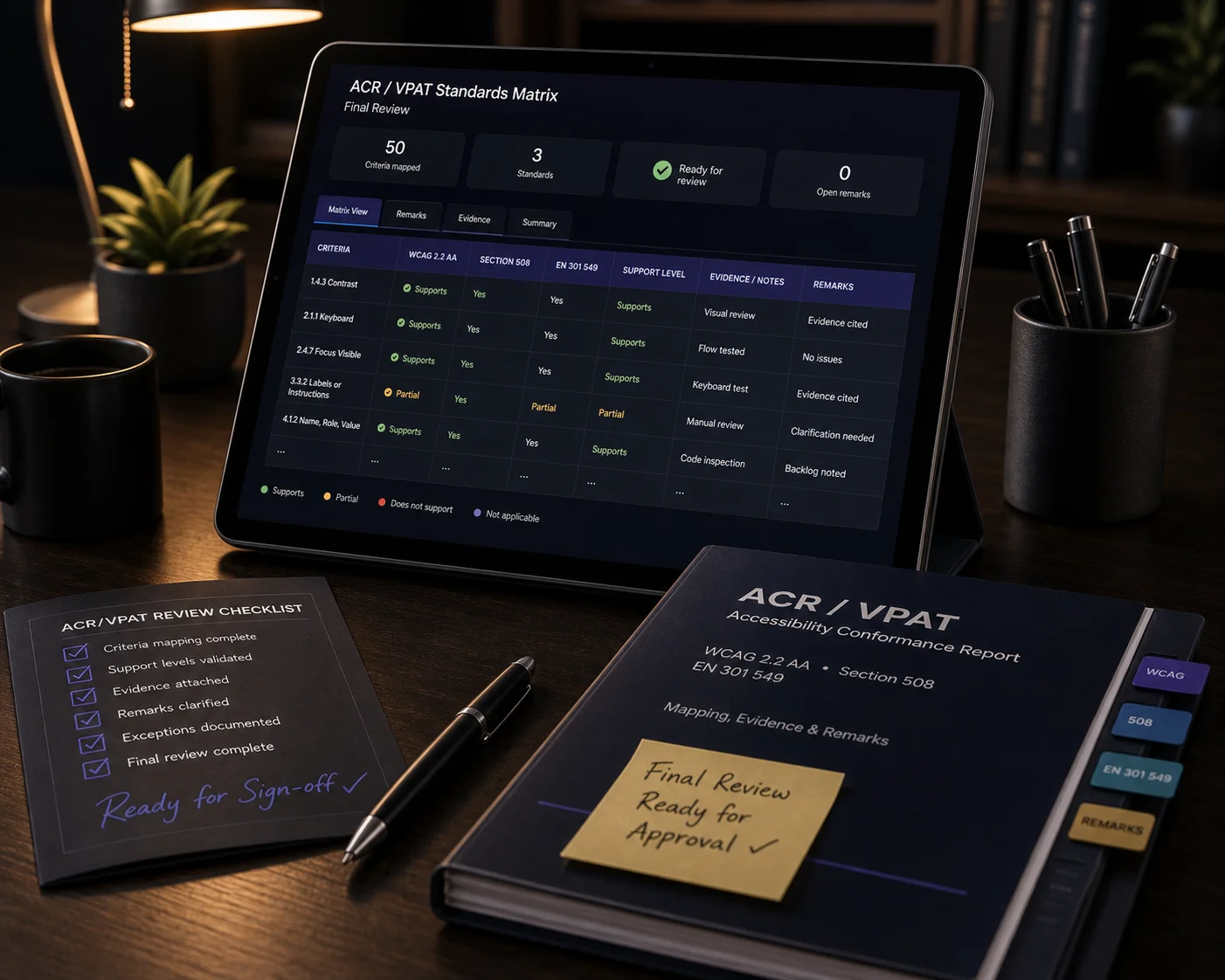
Standards conformance matrix
WCAG criteria, Section 508 requirements, and EN 301 549 notes are mapped to support levels and remarks so reviewers can understand the evidence behind each claim.


The matrix is where the report becomes precise
A conformance report is only useful when each support claim is tied to a specific requirement. The standards matrix translates product evidence into criteria-level support levels and remarks.
This helps reviewers see the difference between fully supported areas, partial support, not applicable criteria, and items that still need remediation or buyer-facing disclosure.
What gets mapped
- WCAG criteria: success criteria, conformance level, affected product areas, and evidence status.
- Section 508 requirements: applicable requirements and remarks for federal or public-sector procurement paths.
- EN 301 549 notes: relevant European accessibility requirements when the buyer or market calls for them.
- Support levels: consistent support language aligned with the selected VPAT template.
- Remarks: short explanations that describe evidence, exceptions, dependencies, or planned follow-up.
Remarks should be clear without being overbroad
Good remarks explain what supports the claim and where the limitation is. They should avoid vague language that makes every criterion sound resolved when evidence only supports part of the experience.
For complex SaaS products, the matrix can also separate product areas, roles, or modules so stakeholders understand which parts of the product were actually evaluated.
What you receive
- A standards matrix mapped to the selected ACR / VPAT template.
- Support-level recommendations for applicable criteria.
- Criteria-level notes for WCAG, Section 508, and EN 301 549 where relevant.
- Known limitations, partial-support details, and not-applicable rationale.
- A structured source of truth for the final report draft and buyer packet.