Resources for well-documented digital accessibility.
Executive briefings, audit playbooks, technical remediation guidance, and compliance references for teams responsible for WCAG, Section 508, EN 301 549, EAA, and ACR/VPAT evidence.
Featured briefings
Prioritized resources for teams that need more than generic accessibility education. Each briefing is written to move leadership, product, engineering, and compliance toward a concrete next step.
The enterprise WCAG audit readiness guide
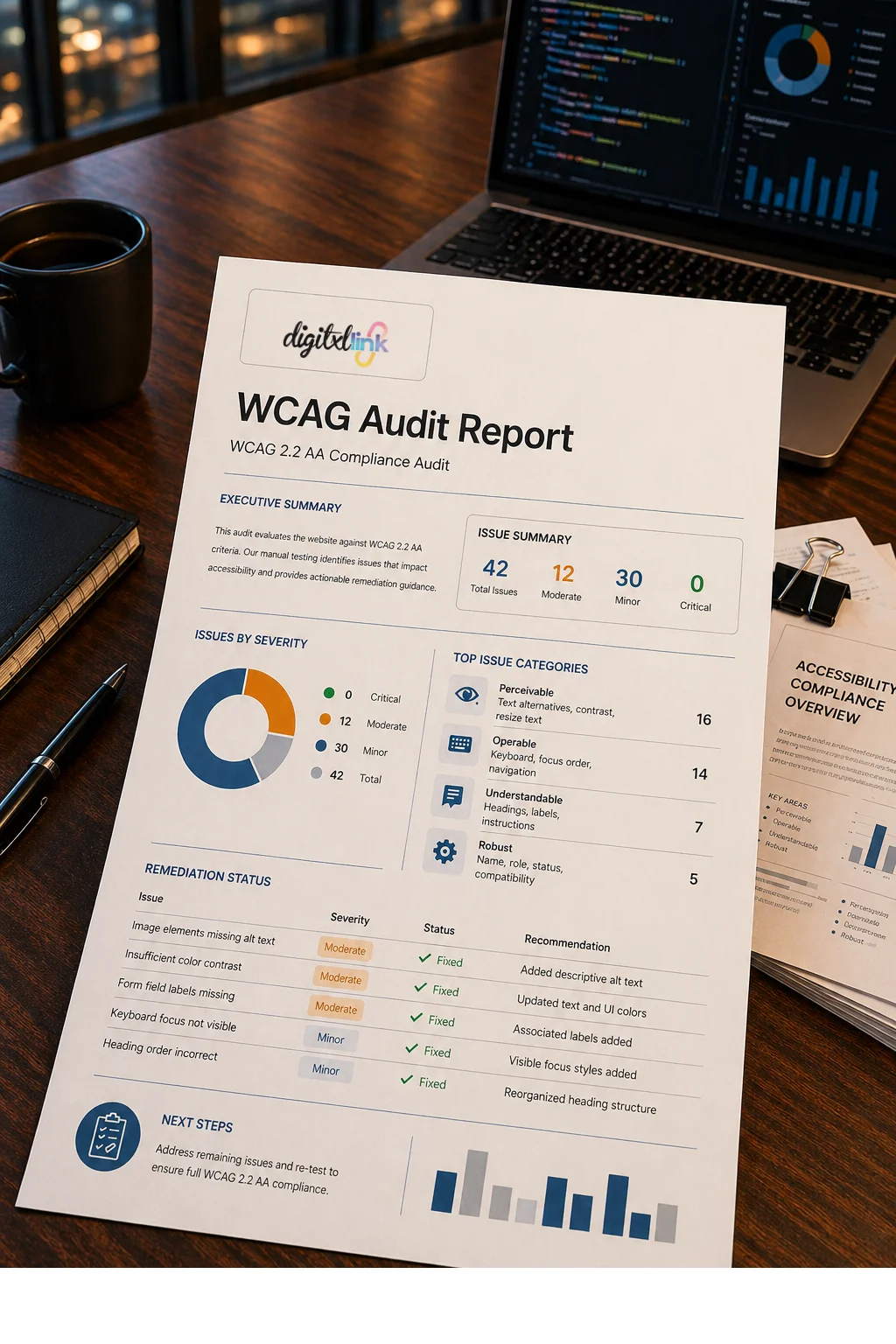
How to define scope, identify business-critical flows, align stakeholders, and collect the evidence needed for well-documented accessibility work.
Keyboard, screen reader, forms, focus, visual content, and dynamic state checks.
Remediation ModelPrioritize fixes by user impact and legal exposureA framework for backlog sequencing, engineering acceptance criteria, and retesting.
Risk ReferenceHow accessibility gaps become operational riskSignals leadership can use to explain urgency without creating noise.
Resource pathways
Corporate accessibility work moves faster when each team can see the decisions, artifacts, and standards that apply to their role.
Risk posture and evidence language
Map accessibility work to scope-aware documentation, procurement review, and risk reduction.
Review compliance path > Product & EngineeringTesting depth and remediation execution
Translate WCAG issues into reproducible defects, acceptance criteria, and release validation.
Review product path > OperationsAudit scope and delivery governance
Define owners, milestones, validation handoffs, and recurring accessibility maintenance.
Review operations path > Procurement & SalesACR/VPAT and buyer confidence
Prepare the proof buyers need when accessibility becomes part of enterprise review.
Start readiness review >Translate obligations into operating artifacts.
Use this map to connect standards, stakeholder expectations, and the evidence your team should preserve through audits, remediation, and validation.
| Framework | What it influences | Resource focus |
|---|---|---|
| WCAG 2.2 AA | Testing criteria, severity, remediation acceptance | Manual audit coverage |
| ADA and risk exposure | Executive urgency, litigation visibility, service access | Risk briefing |
| Section 508 | Public-sector procurement and ICT accessibility review | Readiness assessment |
| EN 301 549 / EAA | European market expectations and digital service readiness | Evidence planning |
| ACR / VPAT | Buyer review, vendor management, accessibility claims | Documentation continuity |
Resource library
Briefings, playbooks, and practical references for planning, delivery, remediation, validation, and stakeholder communication.

Issues that trigger complaints first
Keyboard traps, broken focus states, unlabeled inputs, and inaccessible checkout or intake flows are where legal pressure usually starts.

What needs to be ready before work starts
Access, staging, test accounts, priority flows, and release ownership determine how fast remediation can move.

What gets documented once fixes close
Closed issue logs, validation notes, retest records, and handoff evidence give stakeholders a traceable record to review.

Enforcement and litigation signals
A curated hub for teams explaining why digital accessibility risk needs active ownership and repeatable evidence.

Common barriers audit teams catch
Examples of keyboard traps, missing names, poor focus states, form recovery gaps, and visual content failures.
When to request a risk assessment
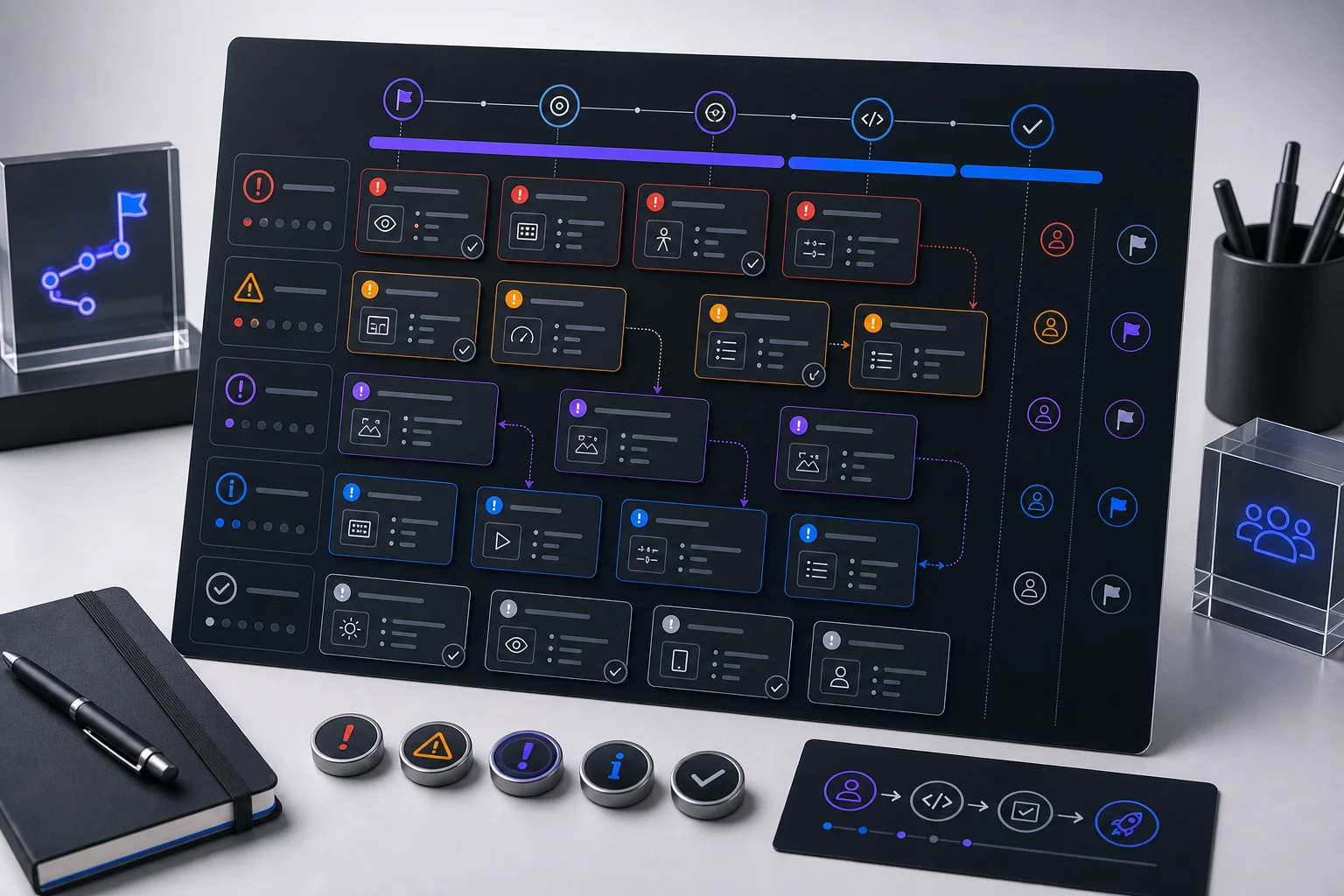
Use this when leadership needs a clear read on scope, severity, likely remediation effort, and next steps.
Make accessibility repeatable, not reactive.
Corporate teams need an operating rhythm: define scope, run manual validation, remediate with accountable owners, and preserve evidence after release.
Resource questions
Short answers for teams deciding where to start and how to use these templates with confidence.
Are these resources a substitute for an audit?
No. These templates help teams scope, prepare, and prioritize, but reliable accessibility work still requires manual review, assistive technology testing, documented findings, and validation after remediation.
Where should an enterprise team start?
Start with scope if you are pre-audit, remediation planning if you already have findings, and validation if fixes are ready for retest. Most teams pair the scope worksheet with the audit-readiness guide on the first pass.
Can these support procurement or legal conversations?
They can frame the conversation and help organize the work, but formal procurement or legal evidence should be based on current product behavior, validated audit results, and maintained ACR / VPAT documentation tied to a real release.
What standards do these resources map to?
WCAG 2.2 AA is the primary reference. Where it matters, the worksheets also call out ADA Title III, Section 508, EN 301 549, and EAA readiness so the same prep work covers US and EU procurement requirements.
Do we need to give an email to download them?
Yes. A work email lets us send the resource, follow up if a newer version replaces it, and keep usage rights tied to a real recipient. Marketing consent is optional and you can opt out at any time.
Can we share these inside our organization?
Yes, internal sharing with your product, engineering, design, QA, procurement, or counsel teams is encouraged. Please don't republish, resell, or rebrand the templates externally without written permission.
How often are the resources updated?
We refresh them as WCAG, EAA, Section 508, and procurement expectations evolve. If you downloaded a resource and a meaningful change ships, we'll send the updated version to the same address.
What if we already have an audit from another vendor?
The remediation prioritization and validation templates are designed to drop on top of an existing audit. They help triage findings by severity, map fixes to owners, and document retest evidence regardless of who produced the original report.
Do these cover mobile apps and PDFs?
Partly. The scope, prioritization, and validation worksheets work across web, mobile, and document properties. Native mobile, PDF remediation, video captioning, and authenticated portal flows are scoped separately when you're ready for full engagement.
What's the next step after using a resource?
Most teams move from a worksheet into a scoped audit, remediation engagement, or VPAT / ACR cycle. Bring the completed template to a discovery call and we'll map a practical timeline, evidence trail, and pricing for the next phase.
Need an executive-ready readout? Start with a risk assessment.
We will identify high-risk accessibility gaps, clarify remediation effort, and define the next practical step for your organization.