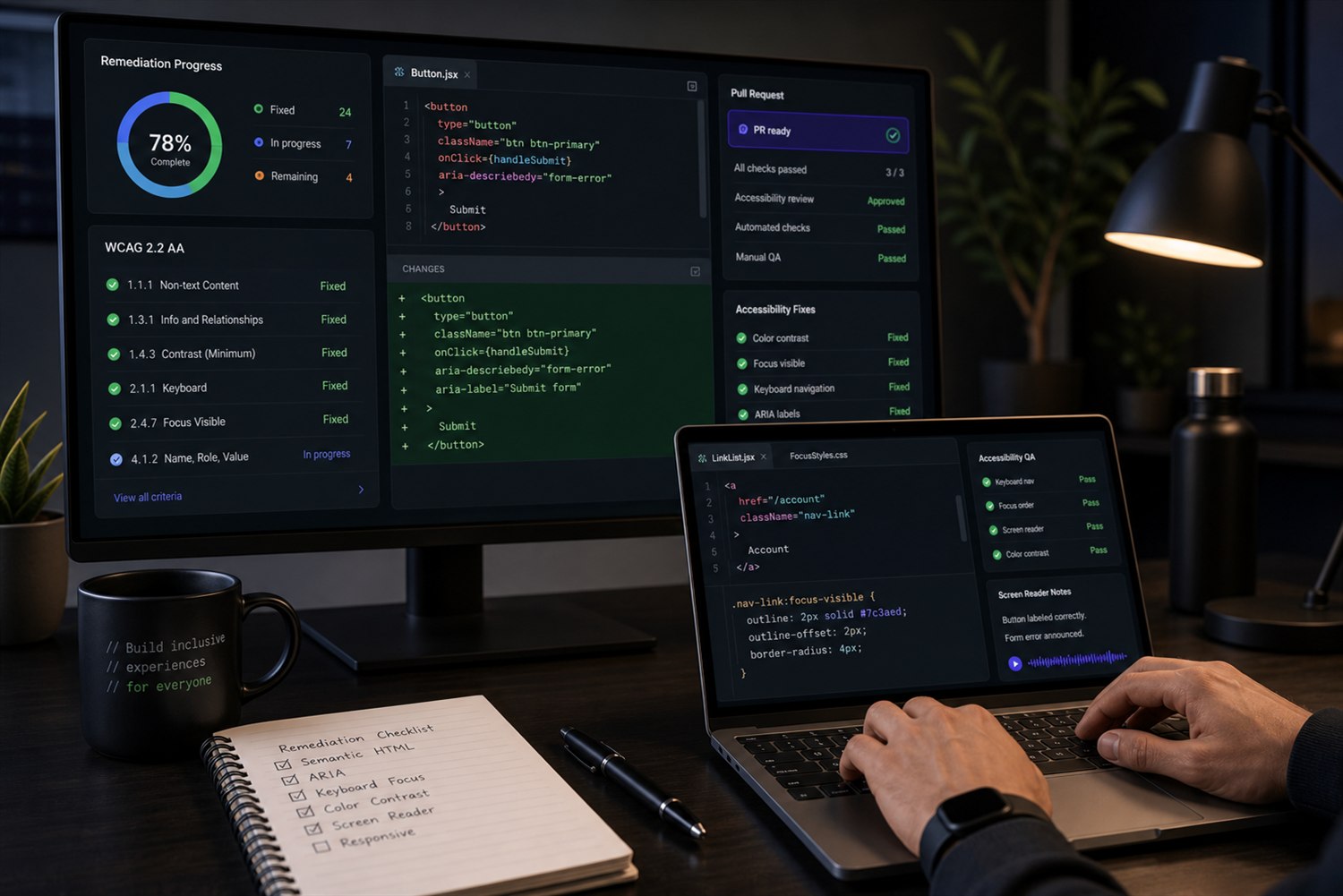
Merge-ready fix package
Source changes are grouped by component, template, and affected behavior so your engineers can review the remediation without rediscovering the audit finding.

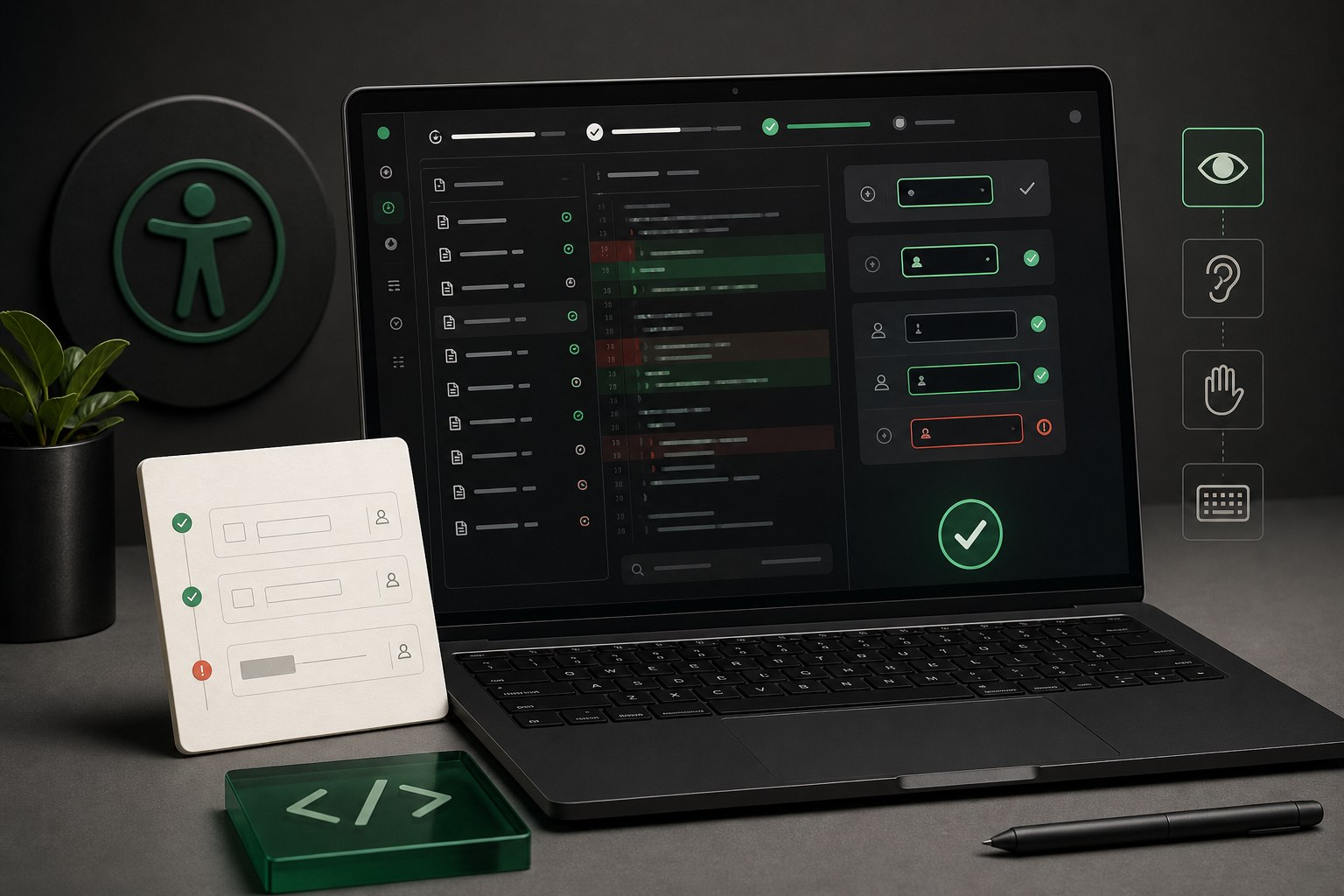
The fix package turns findings into reviewable code
Code remediation should not arrive as a vague checklist or a pile of disconnected edits. The fix package connects each source change to the user barrier it resolves, the affected component or template, and the behavior engineering needs to preserve.
The goal is a clean review path. Your team can see what changed, why it changed, how it maps back to the audit, and which checks should pass before the work is merged.
What the package includes
- Source changes: semantic HTML, ARIA, focus management, keyboard behavior, form states, contrast, or responsive fixes applied directly in the codebase.
- Affected areas: components, templates, pages, flows, design-system tokens, or shared utilities touched by the remediation.
- Audit traceability: issue IDs, severity, WCAG success criteria, and notes that connect the patch back to the original finding.
- Review notes: expected behavior, implementation decisions, known tradeoffs, and any follow-up items that belong outside the merge.
- Validation path: the checks QA should run before release, including keyboard, screen reader, zoom, mobile, and form-state coverage where relevant.
Grouping prevents noisy remediation
Many accessibility failures repeat because the same pattern is reused across the product. A merge-ready package groups those fixes around the shared source of the barrier whenever possible.
If a button component lacks an accessible name, the fix should target the component contract. If a modal traps focus incorrectly across several templates, the package should identify the shared interaction and the screens that inherit it.
Engineering can review behavior, not just syntax
Accessibility changes often alter state, focus order, announcement behavior, or markup relationships. The package describes those behavioral expectations so review does not reduce to whether the code compiles.
- Accessible names and descriptions are intentional and testable.
- Focus states, focus movement, and keyboard paths match the user journey.
- Error, loading, disabled, expanded, selected, and live-region states are handled consistently.
- Visual changes preserve contrast, zoom, reflow, and responsive behavior.
- Shared component changes are documented so future work does not reverse the fix.
What you receive
- A review-ready source patch or implementation package for the agreed remediation scope.
- Notes that connect code changes to findings, WCAG criteria, severity, and affected product areas.
- Clear separation between fixed items, blocked items, and backlog recommendations.
- Validation instructions for QA, product, and accessibility review.
- Release context that supports a clean handoff into regression testing.