Remediation handoff
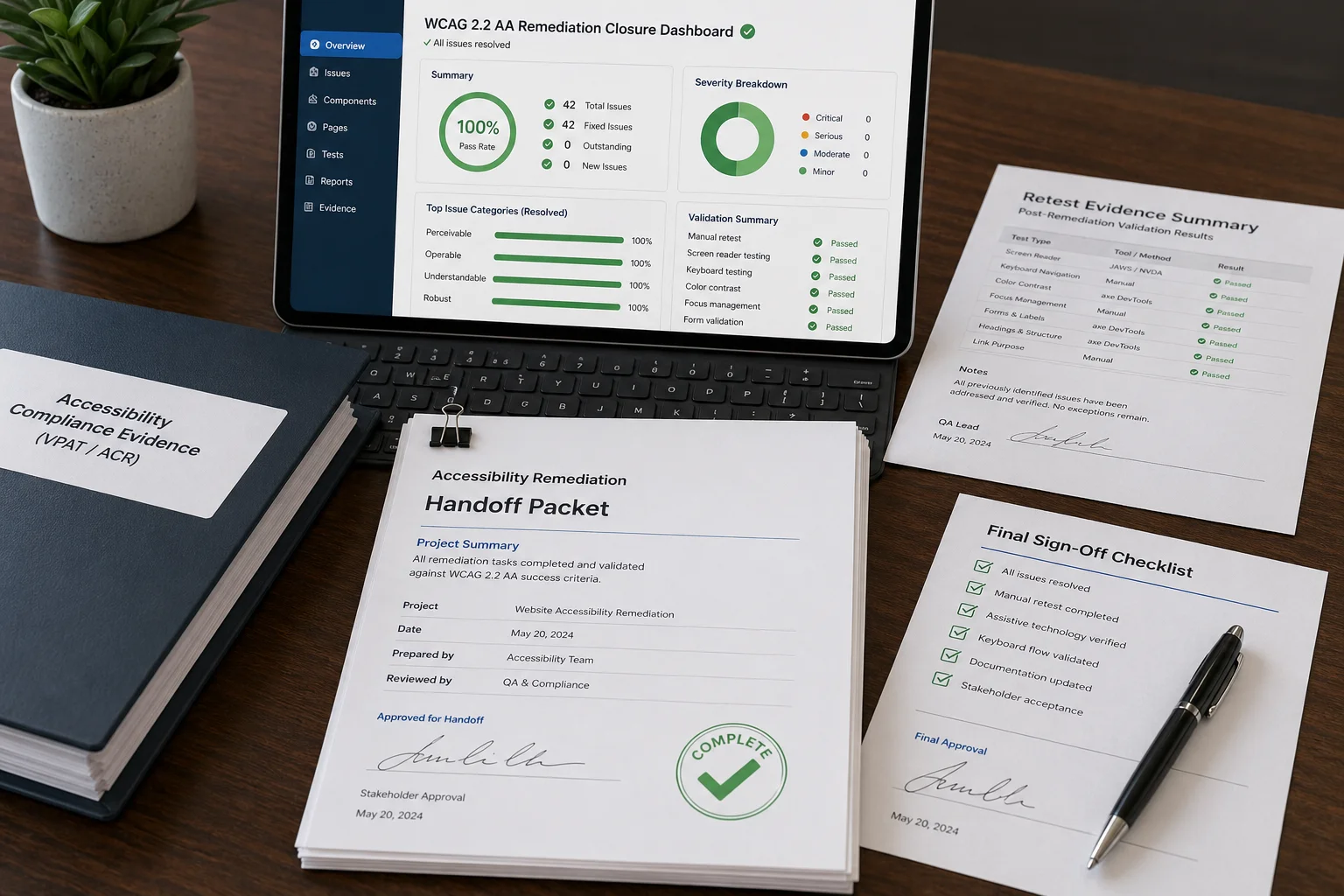
Resolved issues, changed code areas, validation evidence, and remaining risk are packaged for release planning so the work can close without losing context.

Handoff keeps closure from becoming guesswork
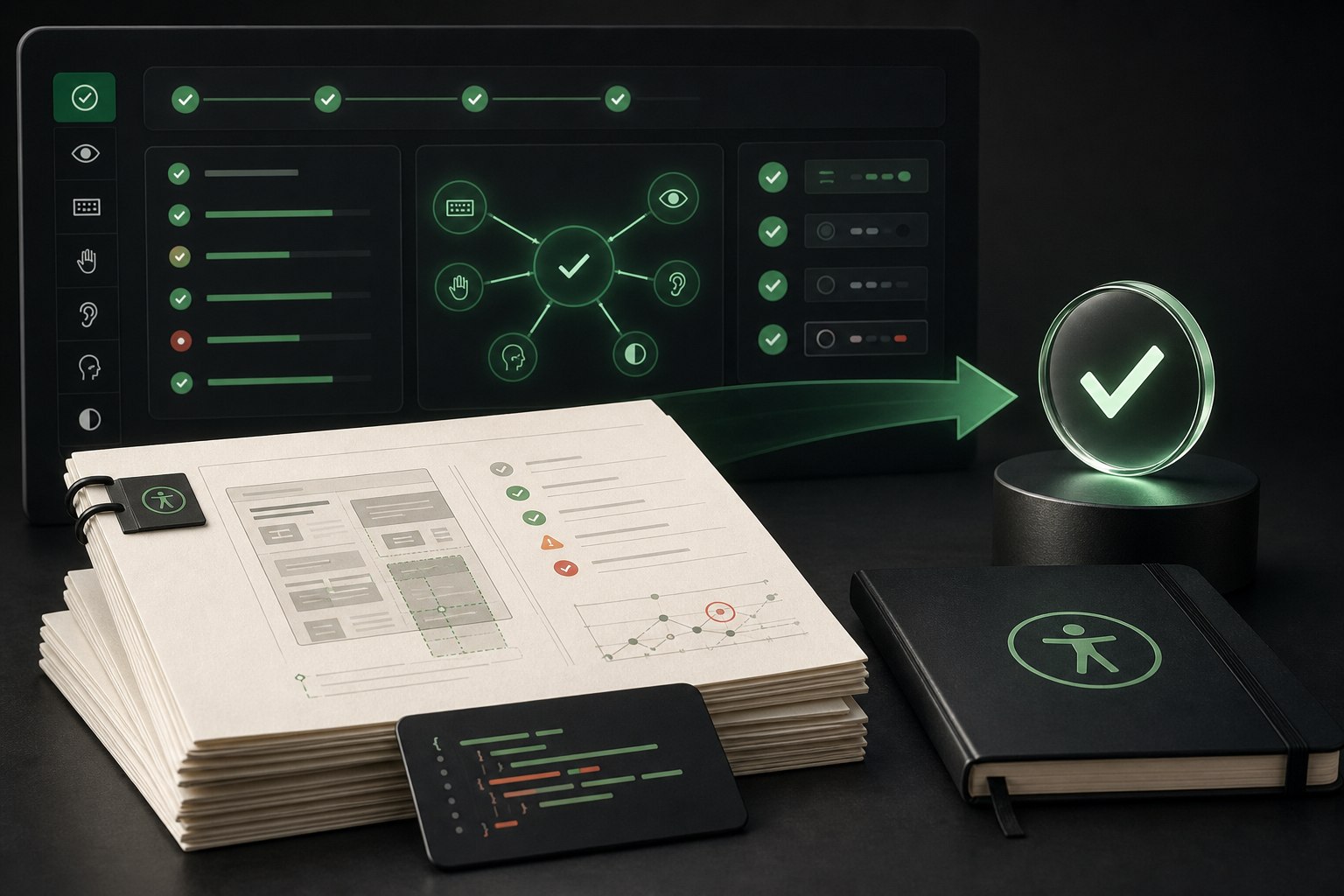
When remediation work closes, the team still needs to know what changed, what passed validation, what was deferred, and how the release should be watched after deployment. A handoff packet preserves that context.
The remediation handoff is built for product, engineering, QA, compliance, counsel, and future maintainers. It turns the finished work into a record that can survive release planning, stakeholder review, and future regression questions.
What the handoff includes
- Resolved items: findings closed in the remediation window, with issue IDs, severity, affected areas, and closure notes.
- Changed code areas: components, templates, utilities, styles, content rules, or third-party configurations touched by the fixes.
- Validation evidence: retest results, reviewer notes, environments, methods, and any screenshots or recordings that support closure.
- Release context: branch, pull request, deployment, feature flag, version, or environment details needed for planning.
- Remaining backlog: items deferred, blocked, out of scope, vendor-owned, content-owned, or recommended for future monitoring.
Release notes separate fixed work from future risk
Good closure does not hide remaining risk. It names what was fixed and what was not. That helps stakeholders understand whether the release is clear, whether a follow-up sprint is needed, or whether a third-party dependency still requires attention.
Separating fixed, deferred, blocked, and out-of-scope items keeps the release decision clean. It also prevents future teams from assuming that a closed remediation window means every accessibility concern in the product is gone.
Evidence supports compliance and maintenance
The handoff packet gives compliance and legal teams a reviewable record without forcing them into the source code. It also gives engineering enough context to protect the fixes during future feature work.
- Closed issue logs can support status updates, procurement questions, and audit follow-up.
- Validation notes explain how the fix was verified and which methods were used.
- Changed-area summaries help future developers find the relevant component or template quickly.
- Backlog notes keep open risk visible instead of burying it in chat or memory.
What you receive
- A remediation closure summary for resolved, deferred, blocked, and remaining items.
- Changed code area notes tied back to the affected product experience.
- Validation evidence for keyboard, screen reader, responsive, zoom, and form-state checks where applicable.
- Release-readiness notes for product, engineering, QA, and compliance stakeholders.
- A practical record that can feed ACR or VPAT documentation, procurement responses, or future audits.