Regression validation pack
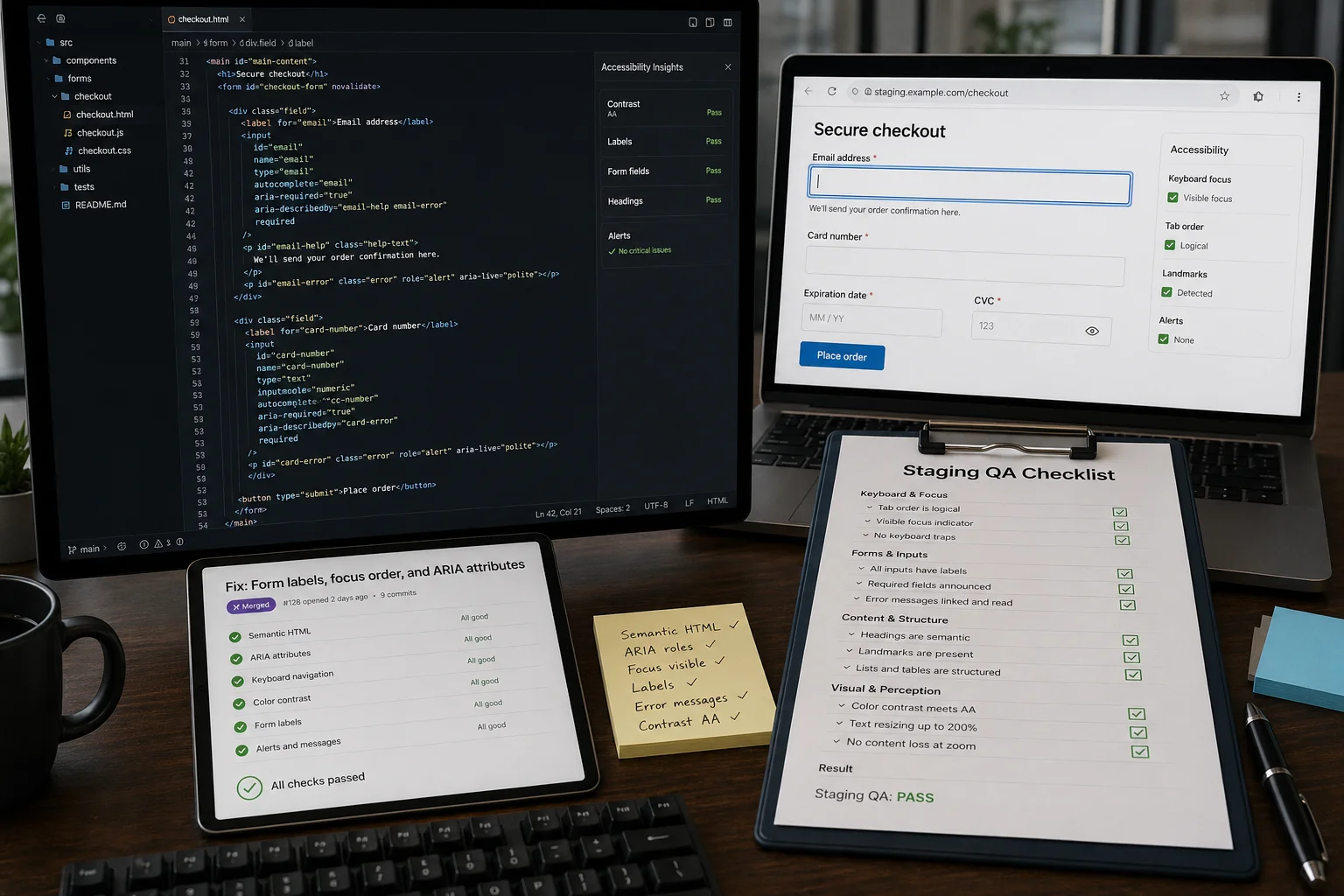
Keyboard, screen reader, responsive, zoom, and form states are retested after the remediation lands so release decisions are based on evidence, not assumption.

Validation proves the fix survived the product
Accessibility remediation is not complete the moment code is merged. The affected journey needs to be retested in the environment where users will actually encounter it, with the states and assistive technology behavior that made the original issue meaningful.
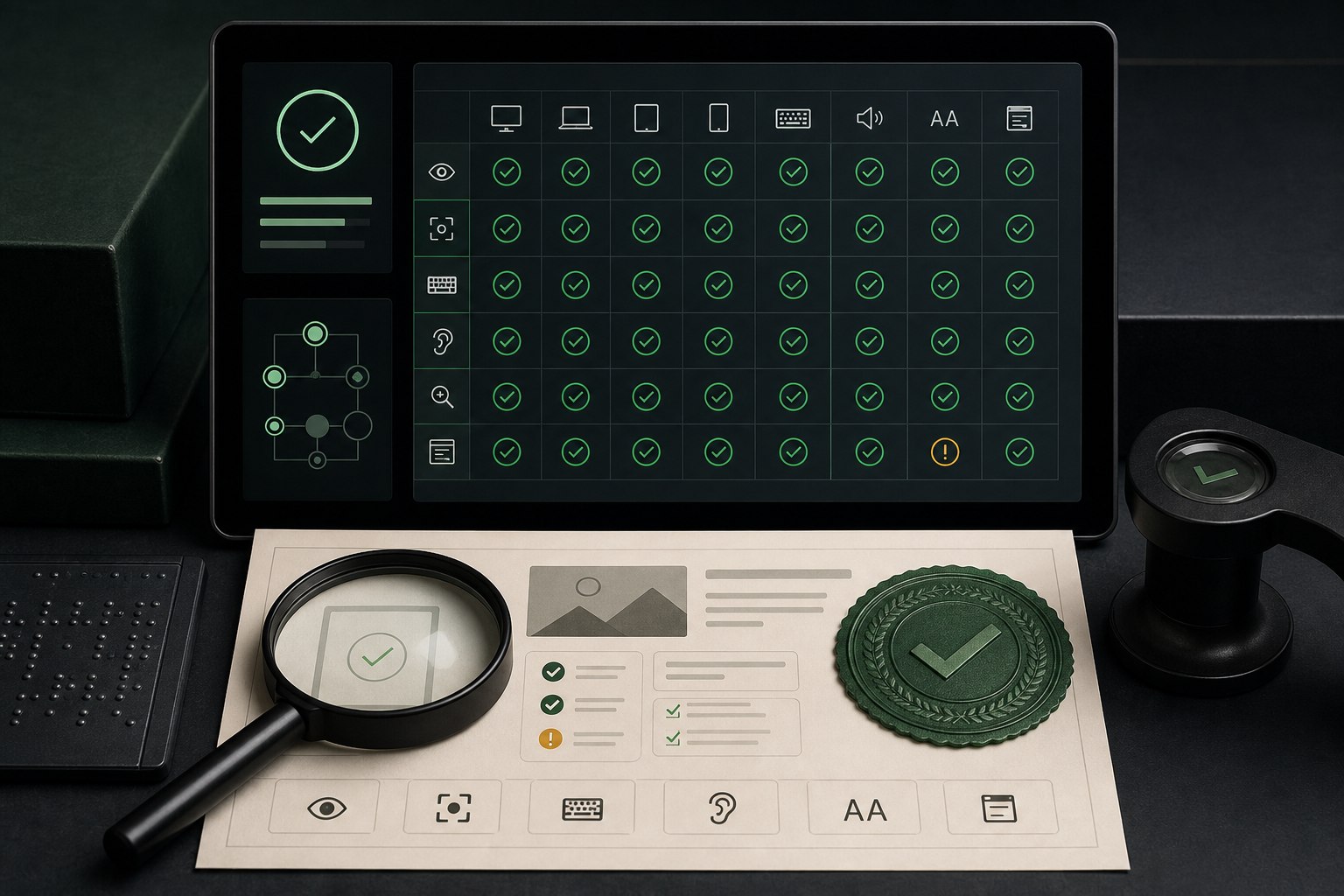
The validation pack documents that retest. It shows which fixes passed, which flows were covered, which states were checked, and whether any follow-up work remains before release.
What gets retested
- Keyboard paths: tab order, focus visibility, skip paths, menus, dialogs, forms, and interactive state changes.
- Screen reader behavior: accessible names, roles, states, instructions, errors, live messages, headings, and landmark context.
- Responsive and zoom states: reflow, text resizing, viewport changes, touch targets, and content that must remain available without horizontal scrolling.
- Forms and recovery: labels, required states, helper text, invalid messages, summaries, focus movement, and success confirmation.
- Regression risk: shared components, templates, or design-system changes that could affect more than the original page.
Validation notes make QA repeatable
Each validation note should be clear enough for another reviewer to repeat the test. That includes the environment, browser, viewport, assistive technology context, user role, test account state, and the exact workflow used.
When a fix depends on a feature flag, third-party embed, content update, or release branch, the validation pack calls that out so the result is interpreted correctly.
Pass means the original failure is no longer reproducible
A pass result is tied to the original barrier. The reviewer confirms that the user task can now be completed and that the expected accessible behavior is present in the affected state.
- Critical paths are tested before lower-risk cleanup items.
- Shared component fixes are checked in representative places, not only one screen.
- Visual, keyboard, and assistive technology behavior are reviewed together where they interact.
- Remaining backlog items are separated from the fixed release scope.
What you receive
- A regression validation summary for patched components, templates, and user flows.
- Pass, partial pass, blocked, or backlog status for relevant findings.
- Notes for keyboard, screen reader, responsive, zoom, and form-state coverage.
- Release concerns and follow-up items clearly separated from resolved fixes.
- Evidence that can feed the final remediation handoff packet.