Remediation roadmap
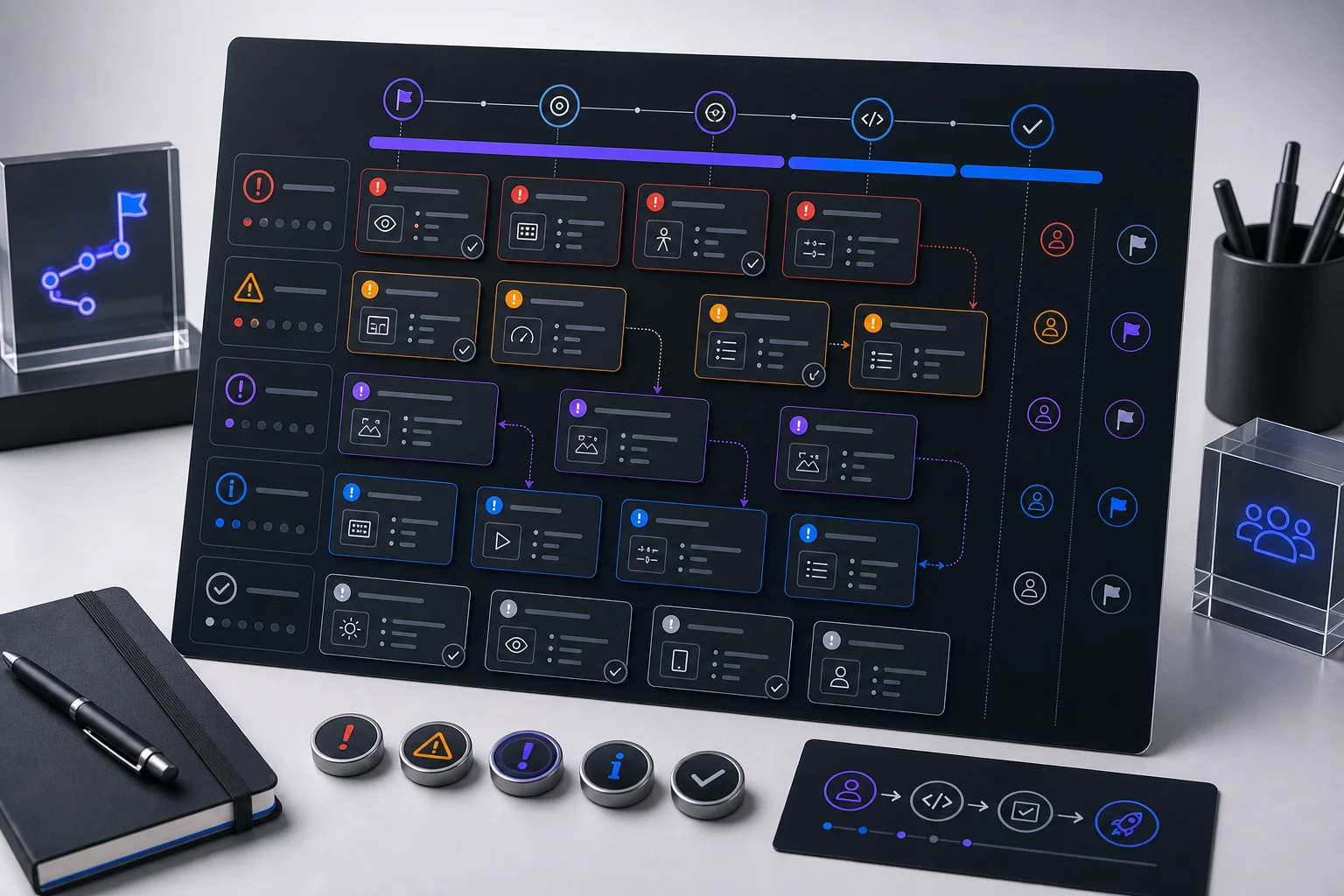
Findings are grouped into a fix sequence so product and engineering know what reduces the most accessibility risk first.


A roadmap prevents audit findings from stalling
After an audit, the hardest part is often not identifying issues. It is deciding what to fix first, who owns it, what can ship together, and how to prove progress without losing the original risk context.
The remediation roadmap turns the report into a practical sequence. It groups findings by user impact, legal exposure, shared component reuse, engineering dependency, and retesting needs.
How the roadmap is grouped
- Critical blockers: issues that stop core tasks, account access, checkout, forms, navigation, or authenticated workflows.
- High-risk repeated patterns: shared components, templates, and design-system issues that create repeated WCAG failures.
- Workflow dependencies: fixes that need design, content, vendor configuration, authentication, or release coordination.
- Retest path: how each wave will be verified after implementation.
- Known deferrals: lower-risk or blocked items that should remain visible instead of disappearing from the backlog.
Risk ranking keeps the plan honest
A useful roadmap does not sequence work by convenience alone. Fast fixes are valuable, but blockers in important user journeys need to remain visible even if they require more coordination.
Risk ranking balances the severity of the barrier, the number of users affected, the importance of the workflow, the number of repeated instances, and the likelihood that the item will matter in legal, procurement, or customer review.
Engineering needs acceptance criteria
Each roadmap item should be specific enough to become work. That means the issue has a clear owner, an affected component or workflow, expected behavior, WCAG criteria, and retesting method.
- Ticket-ready summaries for product, design, engineering, content, QA, and vendor owners.
- Expected behavior written from the user outcome, not just the code attribute.
- Dependencies called out before sprint planning begins.
- Release wave recommendations for the highest-risk findings first.
- Retest notes that preserve the original assistive technology or manual test context.
Progress reporting becomes clearer
The roadmap gives leadership a cleaner way to understand progress. Instead of saying a list is partially complete, the team can show which critical flows have been cleared, which shared components are repaired, which findings are waiting on dependencies, and which items need retest evidence.
That matters for compliance and procurement because status without scope can be misleading. A roadmap keeps scope, priority, and validation connected.
What you receive
- A risk-ranked remediation plan grouped by release wave and owner type.
- Priority logic that explains why certain fixes come first.
- Backlog-ready notes for critical, high, medium, and deferred findings.
- Retesting and evidence requirements for each wave.
- A planning record that can support remediation, validation, and ACR or VPAT documentation.