
Priority workflow map
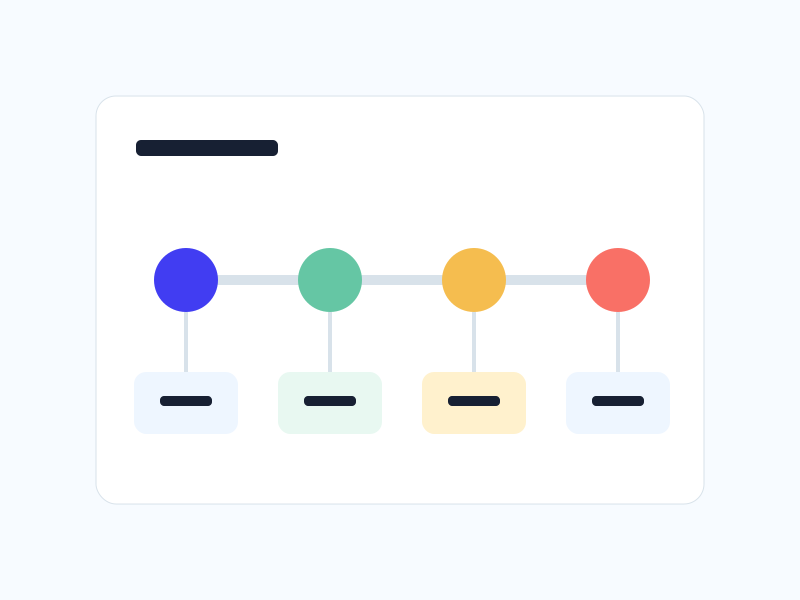
A priority workflow map makes the trigger, owner, systems, rules, review gates, and next actions visible before automation work begins.

What the workflow map is built to solve
AI workflow projects work best when the process is understandable before anything is automated. The map turns a rough idea into a visible operating model with the trigger, owner, system, rule, review point, and next action documented.
Instead of starting with a tool, DigitxlLink starts with the job the workflow needs to perform. That keeps the build focused on real handoffs, real data, and real places where human review still matters.
What we document first
- The trigger that starts the workflow and the condition that should stop it.
- The person or team responsible for the workflow, review, exceptions, and updates.
- The systems, forms, files, inboxes, CRMs, or databases the workflow touches.
- The rules that guide routing, summarizing, drafting, classifying, or escalation.
- The expected output and the quality checks needed before anyone relies on it.
How priorities are chosen
The map helps separate useful automation from risky or low-value ideas. A workflow moves forward when it has a clear input, a repeatable decision path, a measurable output, and a practical review point.
- Impact: how much time, clarity, or consistency the workflow can add.
- Repeatability: whether the work happens often enough to justify automation.
- Risk: whether the output needs approval before it reaches a client or system of record.
- Access: whether the right data, examples, and tools are available.
- Maintenance: who will review exceptions and keep prompts or rules current.
What you receive
The workflow map gives decision makers and implementers the same view of the work. It makes scope, dependencies, and review expectations visible before build time is spent.
- A mapped workflow path from trigger to final output.
- Ownership notes for review, exceptions, updates, and escalation.
- Input and output requirements for the first buildable version.
- Risk notes for anything that requires human approval or auditability.
- A recommended first automation target with next-step implementation notes.
How teams use it after delivery
The map becomes the source of truth for the automation sprint. It lets your team approve the workflow, challenge assumptions, and avoid building around a process that is still unclear.
The goal is simple: make the workflow clear enough that automation helps the team instead of adding another confusing system.
