Working automation prototype
A working automation prototype gives your team a scoped first version to test against real examples before it becomes part of daily operations.

What the prototype is built to prove
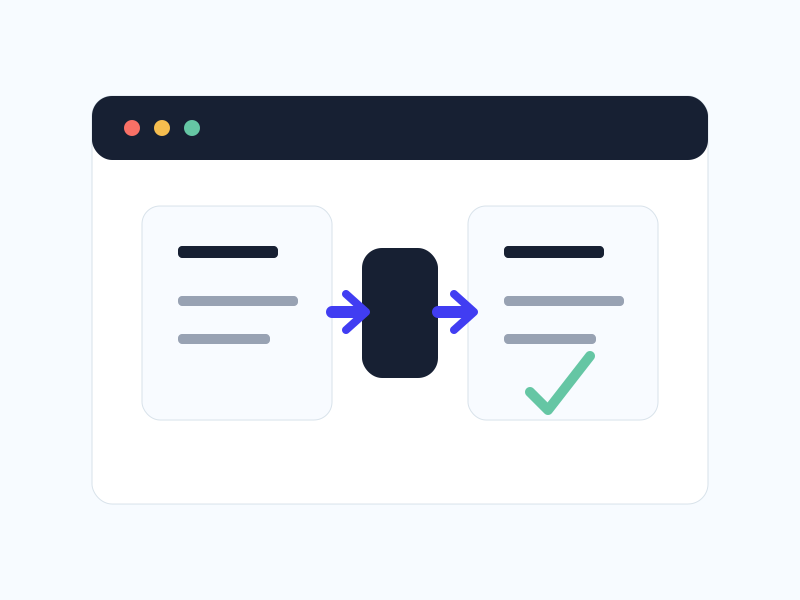
A prototype keeps the first automation focused. It shows whether the workflow can handle real examples, produce a useful output, and fit the way your team already reviews work.
DigitxlLink scopes the prototype around a practical workflow instead of a broad AI experiment. The result is something your team can test, critique, and either approve, adjust, or pause with clear evidence.
What goes into the first build
- Sample inputs that represent the real workflow, not idealized demos.
- Prompt, rule, routing, or template logic for the first usable version.
- Output formatting that matches how the team needs to review or reuse the result.
- Error, exception, and low-confidence handling notes.
- A review path that keeps a human in control where accuracy or judgment matters.
How the prototype is tested
The prototype is tested against examples that reveal edge cases, missing context, unclear rules, and review friction. This makes the workflow stronger before it is treated as an operational system.
- Expected examples that should produce clean results.
- Messy or incomplete examples that need graceful handling.
- Review examples that require approval before sending or saving.
- Failure examples that should stop the workflow or request more information.
- Output checks for clarity, tone, completeness, and handoff usefulness.
What you receive
The prototype is delivered with enough context for your team to understand what it does, what it does not do, and what needs to happen before the workflow is expanded.
- A scoped working version of the automation or assistant workflow.
- Input and output examples used during testing.
- Review notes showing where the workflow performs well or needs adjustment.
- Known limitations, edge cases, and recommended improvements.
- A handoff path for approval, iteration, or ongoing support.
How teams use it after delivery
The prototype becomes the decision point between idea and operation. Your team can test it, validate whether the workflow saves meaningful time, and decide what should be hardened next.
The goal is not to make AI feel impressive. The goal is to make one workflow useful, reviewable, and ready for a responsible next step.
